
Outdoor Electrical Safety Tips and Short Guides
Stay safe outdoors with practical electrical tips. Learn how to handle cords, outlets, and lighting the right way to prevent accidents.
CATEGORIES




Why Outdoor Electrical Safety Matters More Than You Think
Published: 12-June-2025
TL;DR

Keep all outdoor outlets weatherproof, use extension cords rated for outdoor use, and never overload circuits. Check lighting, tools, and power boxes regularly. If in doubt, shut it off - electricity and shortcuts don’t mix.
I’ve seen too many patios and gardens wired like science experiments – tangled cords, exposed plugs, and lights hanging off rusty nails. It works… until it doesn’t.
The truth is, outdoor electrical hazards creep up slowly. Weather eats away at insulation. Kids tug cords in ways adults don’t.
Moisture seeps into connections you thought were safe. Indoors, you might just trip a breaker.
Outdoors, you add water and metal into the mix – and suddenly, small mistakes can become serious.
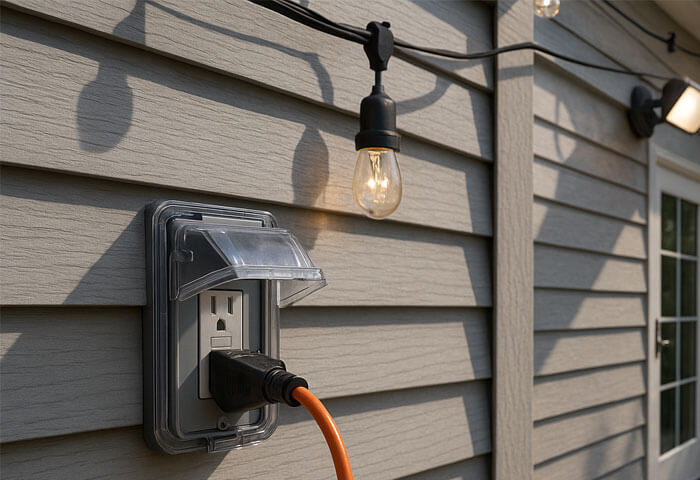
Outdoor electrical safety – AI Image
I always tell people: look around your yard at night after rain.
Would you trust every plug, cord, and light to be safe in those conditions?
If not, it’s time to rethink.
Outdoor Electrical Safety Checklist
| Category | Do This | Why It Matters |
| Outlets | Install GFCI + weatherproof covers | Stops shocks, keeps plugs dry |
| Cords | Use outdoor-rated, 3-prong cables | Prevents overheating and shorting |
| Loads | Spread appliances across outlets | Avoids overload and breaker trips |
| Lighting | Use outdoor-rated, inspect each season | Prevents cracks and water intrusion |
| Tools | Inspect cords, keep plugs off ground | Reduces wear, lowers shock risk |
Weatherproof Outlets Are Non-Negotiable
If you only do one upgrade, do this. Outdoor outlets must be covered and rated for outdoor use.
A proper GFCI outlet (ground fault circuit interrupter) is designed to trip instantly when it senses current where it doesn’t belong – like in water, or in a person.
Without one, a shock can happen before you even realize something’s wrong. Add to that a weatherproof cover, and you’ve got a setup that stays safe even in a downpour.
What I’ve learned: homeowners often try to “make do” by running cords out of a window.
That works for one night, maybe, but it becomes a long-term fire and shock hazard.
Spend the extra money, get a proper outlet installed – it’s peace of mind you’ll never regret.
Use the Right Extension Cords
Here’s a big one: not all extension cords are the same. An indoor cord outdoors is basically an accident waiting to happen.
Outdoor-rated cords are thicker, built to withstand UV light and temperature swings, and have stronger insulation. Look for ones labeled with W (for outdoor use) and always go with three-prong grounded cords.
One thing I’ve seen too often is people daisy-chaining multiple cords together. It works – until the weakest link gets overloaded.
If you need length, buy a proper long cord rated for outdoor power tools. It’s safer, cleaner, and avoids those hot, tangled junctions that end up lying in the grass.
Would I run my hedge trimmer on a skinny indoor cord? Not a chance.
Don’t Overload Circuits
I once visited a backyard party where the sound system, fairy lights, and a popcorn machine all ran off a single outlet. Guess what happened? Pop, sparks, silence.
Every circuit in your home has a limit, usually 15 or 20 amps. Exceed it, and best case, the breaker trips.
Worst case, wires overheat. Outdoors, where cords are long and often coiled, that overheating happens faster.
Here’s my advice: if you’re running big-ticket items – heaters, pumps, fridges – give them their own outlet.
Use power strips with surge protection for the small stuff, but never for high-wattage gear. Keep an eye on heat, too. If cords feel warm, you’re pushing the load too far.
Think of it like this: electricity doesn’t care if it’s for a party or work. Push it too hard, it pushes back.
Outdoor Lighting: Check Before You Hang
String lights look great, but only if they’re safe.
Outdoor-rated lights use heavier insulation and waterproof seals around the bulbs.
Indoor ones? They crack, fade, and short-circuit faster than you’d think. And that’s before the first rainstorm.
I recommend inspecting lights every season. Look for cracks, stiff wires, or corroded plugs. Replace anything suspect. Also, avoid nails or metal staples when hanging.
They pierce insulation and create hidden faults. Use hooks or clips instead.
A friend once told me, “But my lights worked fine last year.” Sure, but outdoor plastic degrades. Cold makes wires brittle. Sun bakes the insulation.
Don’t gamble – replace them before they cause a short.
Tools and Power Equipment
Mowers, trimmers, pressure washers – they all need power. That means cords, plugs, and sometimes water nearby.
Before I use any tool, I give the cord a quick inspection. Nicks, cuts, or frayed spots mean it’s time to repair or replace. Don’t assume “it’ll be fine just once.” That “once” is often when it fails.
Keep all connections off the ground. I use simple cord reels or hangers to keep plugs dry. And for heaven’s sake, don’t tug cords out by the wire.
Always pull from the plug. It sounds small, but it saves cords from breaking internally.
I’ve also seen people mow over their cords. Once. That’s usually all it takes for them to respect electricity a bit more.
Golden Rule: Shut It Off When in Doubt
If you’re ever unsure, turn it off. Electricity is not something to “wing it” with.
I’ve had neighbors try duct-tape fixes on lights or patch cords with plastic bags. It seems clever until the first storm rolls in. Then it’s sparks, breakers, and damaged gear.
My personal rule is simple: if something looks dodgy, shut it off until you can replace or repair it properly.
Nine times out of ten, it’s cheaper and faster than cleaning up the mess later.
Think of electricity like a strict teacher: it rewards discipline and punishes shortcuts. Better to lose an hour replacing a cord than risk an accident you can’t undo.
FAQs
Q: Can I use indoor lights outside if they’re under a roof?
No. Even covered patios get damp. Only outdoor-rated products are safe.
Q: How often should I check outdoor cords and outlets?
At least once every season. More often if you’re using tools daily.
Q: What’s the safest way to power a fire pit or heater?
A dedicated, GFCI-protected outdoor outlet. Never an indoor cord run outside.
Q: Do solar lights remove all risk?
Mostly, yes. They’re self-contained and safe. Still, check them for cracks and water damage.
Closing Thought
Outdoor electricity doesn’t have to be scary – but it does demand respect. Get the right outlets, cords, and lights. Don’t overload. Inspect often.
And when something feels off, shut it down. That’s how you enjoy your garden or patio without giving danger an invitation.

Marvin McAlister is an enthusiastic advocate for home safety and security, possessing a solid grasp of the subject through years of personal and professional involvement with security equipment. Check more about Marvin here.

The content of this page is meant exclusively for informational purposes. Conducting a professional safety audit is our recommendation when there is a proven danger.
Categories




Subcategories
Essentials 》guides • case studies
Around the home 》garden • patio • pool • garage • shed • recreational areas • electrical • lighting • animals and pests • fence • sidewalk • mailbox • doorstep
Far from home 》city • village • countryside • wildness
Vehicle safety 》general • passengers • driving • parking
You are in this section
– Safety plans
– Home security
– Fire safety
》Outdoor safety
– Firearm safety
– Family safety
– Disaster preparation