
Treehouse Safety: Protecting Kids’ Favorite Hideout
Keep your kids’ treehouse safe and secure. Learn how to lock ladders, add lighting, store tools, and teach smart habits without ruining the fun.
CATEGORIES




Why Treehouses Need More Than Just Nails and Boards
Published: 08-June-2025
TL;DR

Treehouses should be fun but safe. Add a lockable ladder or hatch, keep tools and sharp items out of reach, light up the area at night, and set a few ground rules with your kids. Balance security with the sense of adventure.
Let’s be honest: kids see a treehouse as pure magic, while parents see it as… well, a safety puzzle on stilts.
I’ve built and inspected enough of them to know the risks: loose ladders, strangers wandering into the garden, or even kids trying stunts after dark.
Here’s the question I usually start with: Would I be comfortable if my child was out here while I was inside making dinner?
If the answer is “not really,” then it’s time for a few upgrades.
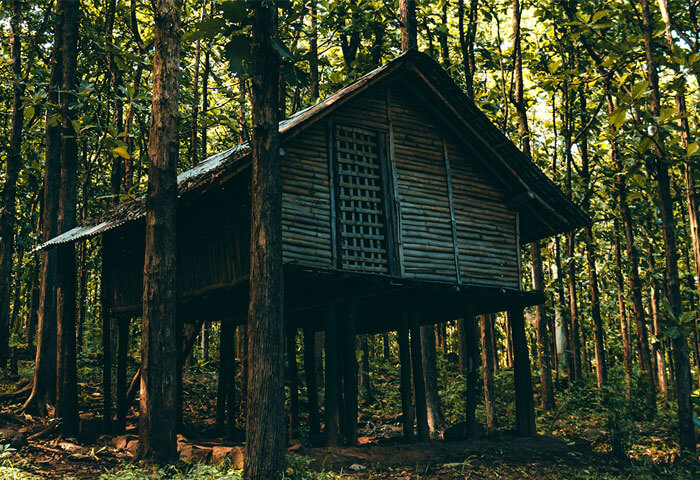
Treehouse – Photo by Dhilip Antony on Unsplash
Here’s a short overview of the things to keep in mind, broken down into key areas to help you stay on track and prepared.
Secure the Way In: Ladders and Entrances
Most treehouses rely on one of two things: a ladder or a hatch. Both can be secured, but you need to think like a curious kid and like a trespasser.
What I suggest:
- Use a lockable ladder or removable steps. At night or when you’re away, take them down.
- Add a hatch with a child-friendly lock that stops the ladder being used unless you’re around.
- Reinforce any railings – the higher the house, the stronger the barrier should be.
I’ve seen kids turn a rope ladder into a swinging trapeze. Fun, yes. Safe? Not at all. Keep ropes out of reach unless you’re supervising.
Light the Area at Night
Why bother lighting a treehouse?
Two reasons.
One: kids will always sneak “one last climb” after dark. Two: light is the best deterrent for anyone wandering in.
I prefer solar motion lights. They charge during the day, flip on at night, and don’t need wiring. Mount one under the platform and another facing the ladder.
Question I often get: Won’t this ruin the atmosphere?
Answer: not really. The lights only trigger when someone moves. The rest of the time, the treehouse stays a magical, shadowy fort.
Keep Tools and Hazards Out of Reach
This one’s simple but overlooked. Kids love playing “builder.” Leave a hammer or saw nearby, and guess what they’ll try to do?
My rule:
- No tools stored in or under the treehouse. Ever.
- No loose ropes, nails, or boards left lying around.
- Regular inspections: check for splinters, loose screws, and wobbling boards.
I once found a child in a neighbour’s treehouse using dad’s screwdriver to “make it stronger.” Good intentions, terrible execution. Keep gear locked away.
Teach Kids Smart Habits Without Killing the Fun
You don’t need to turn a treehouse into a fortress. Half the fun is freedom. But freedom works best with a little guidance.
I always sit down with kids and set a few rules:
- One at a time on the ladder.
- No climbing in the dark.
- No “extra friends” without asking.
- Always shut the hatch when inside.
The trick is to frame it like part of the adventure. “This is your secret hideout — and every fort has rules to keep it safe.” Kids usually love it.
FAQs
Q: How old should kids be before using a treehouse?
In my view, six is a good starting age, but it depends on height, design, and maturity. Younger kids should only use it with supervision.
Q: What’s the best lock for a treehouse ladder?
A simple hasp and padlock works if the ladder is removable. For fixed ladders, use a gate-style barrier that locks across the rungs.
Q: Do I need to insure a treehouse?
Some home policies cover it as part of the property, but not all. If it’s a large structure with expensive gear inside, ask your insurer.
Q: What’s the single most important safety upgrade?
For me, it’s securing the ladder. Control who can get up there, and you’ve solved half the risks.
Closing Thought
Treehouses are meant to spark imagination, not worry. A few locks, some light, safe design, and good habits will keep the magic alive – without keeping you up at night.

Marvin McAlister is an enthusiastic advocate for home safety and security, possessing a solid grasp of the subject through years of personal and professional involvement with security equipment. Check more about Marvin here.

The content of this page is meant exclusively for informational purposes. Conducting a professional safety audit is our recommendation when there is a proven danger.
Categories




Subcategories
Essentials 》guides • case studies
Around the home 》garden • patio • pool • garage • shed • recreational areas • electrical • lighting • animals and pests • fence • sidewalk • mailbox • doorstep
Far from home 》city • village • countryside • wildness
Vehicle safety 》general • passengers • driving • parking
You are in this section
– Safety plans
– Home security
– Fire safety
》Outdoor safety
– Firearm safety
– Family safety
– Disaster preparation