
The Best Shed Alarms and Smart Sensors for 2025
Discover the best shed alarms and smart sensors for 2025. From Yale to Ring, protect tools and bikes with noise, alerts, and connected security.
CATEGORIES




Why Shed Security Needs More Than a Padlock
Published: 07-June-2025
TL;DR

Basic battery sirens still deter. Wireless kits offer flexibility. Smart sensors link to your phone and add layers of evidence. In 2025, the best approach is often a mix: loud local alarm + connected alerts.
Your shed isn’t just a timber outbuilding. For many homeowners, it’s the single largest storage area outside the house.
Inside are bikes worth more than most TVs, tools that can be pawned in minutes, and machinery that funds the second-hand market.
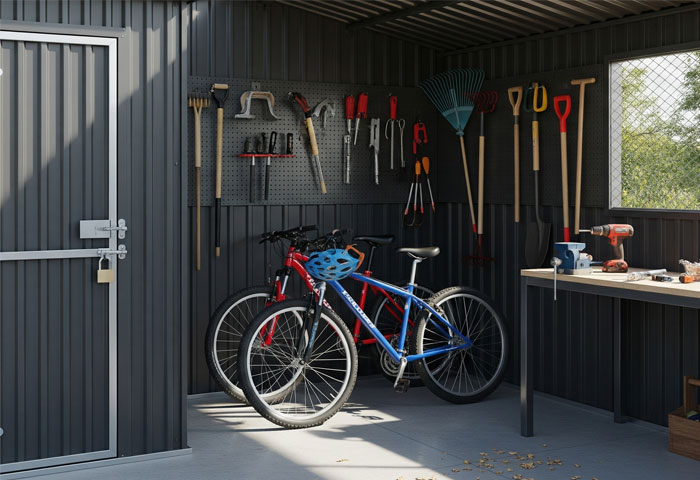
Shed security – AI image
Relying on a single lock is no longer enough. Criminals know how to bypass cheap padlocks in seconds.
That’s why alarms and sensors matter: they change the equation from “quiet, quick grab” to “loud, risky job.”
The Role of a Shed Alarm
Alarms exist to deter and alert. A screaming siren buys you time and attention. A connected alert keeps you in the loop no matter where you are.
In the 1990s, standalone sirens like the Bulldog Secure Shed Alarm were the norm – cheap, simple, and effective against casual thieves. In 2025, expectations are higher.
Consumers want smart notifications, app integration, and evidence capture.
That’s why the best modern alarms blend old-school deterrence with new-school connectivity. Noise scares opportunists.
Notifications help you and the police act. Video evidence supports prosecution. Together, they turn your shed from a soft target into a monitored zone.
Wired Shed Alarms: Reliable but Rare
Wired systems like those offered by Yale Intruder Alarms or Texecom Premier Elite still exist.
They are hardwired to mains power, ensuring no downtime, no dead batteries, and consistent performance.
They shine in outbuildings with electricity – converted workshops, brick-built sheds, or detached garages.
Here, a wired PIR sensor can feed back to your central alarm system. Once triggered, it activates the same sirens and alerts as your house system.
But for the average timber shed, wiring is impractical. Few will trench a cable across the garden or pay an installer hundreds for a small space.
That’s why wired alarms remain niche. They’re brilliant when possible, but most sheds need something easier.
Wireless Battery-Powered Sirens
This is where most homeowners start. Compact devices like the Defender Shed and Garage Alarm or Yale Shed and Garage Siren mount on the wall and trigger when the door opens.
For £20–£40, you get a 110dB+ siren, a simple keypad, and an easy fit. Installation takes minutes – no wiring, just screws.
When triggered, the alarm screams loud enough to scare off an opportunist and alert anyone nearby.
Limitations remain. You won’t get a phone notification unless you’re within earshot.
Cold winters drain batteries faster, meaning checks are essential. And if your shed is far from the house, you may not hear it at all.
Still, in tests, these units buy time. A thief who expected silence is suddenly faced with deafening noise.
Most won’t hang around to cut chains. For low-to-mid value sheds, this is still the cost-effective baseline.
Smart Sensors and Connected Alarms
Smart tech is the big shift. Brands like Ring, Eufy Security, and Arlo now sell compact sensors that make your shed part of a home security ecosystem.
- Ring Contact Sensor (2nd Gen): triggers when a door or window opens, sending an instant phone alert.
- Eufy Motion Sensor: pairs with Eufy HomeBase to detect movement inside.
- Arlo Essentials Indoor Cam: small, discreet, and records clips straight to your cloud account.
Advantages are obvious. You don’t need to be home to know your shed was opened. You get footage, timestamps, and alerts in real time.
The downside? Connectivity.
Wi-Fi dead zones in gardens are common, so many users rely on extenders or mesh systems.
Costs are higher too. Expect £60–£150 per unit. But for e-bikes, power tools, and ride-on mowers, this is cheap insurance.
The Hybrid Approach: Noise + Notification
The most effective setups don’t choose between siren and sensor. They combine both.
Picture this: a Defender siren shrieks as the door opens. At the same time, a Ring contact sensor pings your phone, and an Arlo cam uploads a 15-second clip. The thief faces noise, attention, and recorded evidence.
This layered approach costs more, but it balances deterrence with accountability. Opportunists run.
Determined thieves leave behind digital fingerprints. And you’re never unaware, even if you’re at work or abroad.
Think of it as a triangle: deter, detect, document. The best security hits all three.
Key Features to Look For in 2025
When shopping, prioritise features that last beyond gimmicks:
- Volume: Aim for 100–120dB. (Defender and Yale models hit this mark.)
- Battery alerts: Low-battery notifications save you from silent failure.
- Weatherproofing: Outdoor-rated (IP65+) for anything mounted externally.
- Connectivity options: Dual-band Wi-Fi or Zigbee reduces dropouts.
- Integration: Ring and Eufy sync with wider systems (lights, doorbells).
Ignore novelty features like flashing LEDs or voice prompts. You want reliability, not theatrics.
Final Word: Match Security to Value
Not every shed needs a £200 smart ecosystem. If yours houses rakes and paint tins, a £25 Yale siren will do.
But if it’s storing £3,000 worth of e-bikes, treat it like a mini garage. Layer alarms, sensors, and cameras.
The economics are simple: invest £150–£300 once, avoid £2,000+ in losses.
And the psychological shift is real. With a good alarm, your shed moves from “easy win” to “high-risk mess.”

Marvin McAlister is an enthusiastic advocate for home safety and security, possessing a solid grasp of the subject through years of personal and professional involvement with security equipment. Check more about Marvin here.

The content of this page is meant exclusively for informational purposes. Conducting a professional safety audit is our recommendation when there is a proven danger.
Categories




Subcategories
Essentials 》guides • case studies
Around the home 》garden • patio • pool • garage • shed • recreational areas • electrical • lighting • animals and pests • fence • sidewalk • mailbox • doorstep
Far from home 》city • village • countryside • wildness
Vehicle safety 》general • passengers • driving • parking
You are in this section
– Safety plans
– Home security
– Fire safety
》Outdoor safety
– Firearm safety
– Family safety
– Disaster preparation