Shed Security 101: How to Protect Your Tools and Bikes
Your shed isn’t just a box for junk – it’s where the most stealable gear lives. Bikes, power tools, even lawnmowers. And thieves know it.
CATEGORIES




What Actually Keeps a Shed Safe?
Published: 06-June-2025
TL;DR

Secure the door first (lock + reinforcement), cover windows, add lighting outside, and anchor valuables inside. A shed alarm or camera seals the deal.
If you’re like most folks, your shed isn’t just a wooden box.
It’s where the priciest, most portable gear lives. Bikes. Power tools. Mowers. Stuff that’s quick to grab and easy to sell.
That’s why sheds get hit so often. They’re tucked away, doors are flimsy, and locks are usually an afterthought.
“So what actually keeps a shed safe?”
Short answer: make it hard to get in, hard to see inside, and a pain to leave with anything worth money.
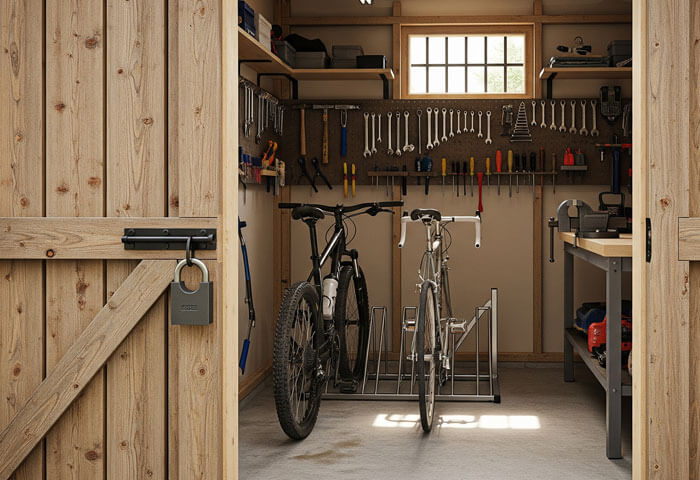
Shed security – AI image
Here’s how I break it down when walking someone’s garden: if I were a thief cutting through at night, what’s my fastest win?
A weak padlock. A clear window showing a bike. A shed in darkness.
Flip each of those, and you’re already ahead.
Why Sheds Are Easy Targets for Thieves
Most sheds are built to store, not to secure. Thin timber panels, basic hasps, cheap padlocks. Add the fact that sheds sit at the back of a garden, far from streetlight or neighbour view, and you’ve got an easy mark.
Think like a thief:
- Quiet corner of the property, nobody watching.
- One kick or a pry bar and the door gives.
- Inside: tools that fit in a rucksack or a bike to ride away on.
If you do nothing, the shed is a silent gift shop.
Lock Down the Door First
Start with the entry point. If the door isn’t secure, nothing else matters.
What works:
- Closed-shackle padlock + heavy hasp and staple. Forces bolt cutters to work harder.
- Hinge bolts. Prevents thieves from just unscrewing hinges and lifting the door.
- Coach bolts. Use inside-out fasteners so screws aren’t exposed outside.
- Door bar. A steel bar across the inside gives an extra layer of resistance.
Avoid the common mistake: buying the biggest padlock but screwing it to a thin, rotting frame. Reinforce the timber or upgrade to steel brackets first.
Pro move: use a weatherproof padlock so you’re not replacing it every year.
Windows: Block the View and Block Access
Windows are the second weak spot. If a thief can see inside, they know if it’s worth the effort. If the glass breaks easily, you’ve just given them an extra door.
Smart upgrades:
- Shatter-resistant film on the glass. Makes smashing noisy and messy.
- Grilles or bars screwed from the inside.
- Opaque film or curtains to block the view.
- No windows at all. If you’re replacing your shed, pick one with solid walls.
Remember: if they can’t see the bike, they may not risk it.
Light Up the Outside
Darkness is a thief’s best friend. Motion lights flip that advantage.
Placement that works:
- Above the shed door, angled down.
- Along the approach path from the garden gate.
- On the house side, aimed to illuminate the shed in your line of sight.
Solar lights work if you don’t have wiring, but test them at night. You want full brightness when someone walks up, not a dim glow that looks decorative.
Bonus: good lighting also makes your camera footage usable.
Anchor Your Bikes and Tools Inside
Even if someone gets inside, don’t let them walk out easily.
Tactics:
- Ground anchors. Bolt a steel loop into the concrete base or a buried slab.
- Heavy-duty chains. Lock bikes or mowers to the anchor.
- Lockable racks. For smaller tools or power equipment.
Why it works: time + noise. A grinder at midnight in a quiet garden is attention-grabbing. Most intruders won’t bother.
Quick test: can a thief grab your bike and leave in 20 seconds? If yes, it’s not secured.
Add Alarms, Cameras, and Smart Sensors
Old-school trick: a shed alarm that screams the second the door opens. Still works.
Today you’ve also got:
- Budget PIR shed alarms – battery powered, loud siren.
- Wi-Fi cameras – mount inside facing the door, or outside on the corner.
- Contact sensors – door opens, you get a phone ping.
Pro move: pair a contact sensor with a camera. That way you know exactly when it opened and who was there.
Even a fake camera can be a deterrent, but a real one gives you evidence.
Habits That Make or Break Shed Security
You can buy all the gear in the world, but habits matter:
- Always lock the shed, even if you’re popping inside for ten minutes.
- Don’t leave valuables leaning against the outside wall (ladders especially).
- Mark your tools and bikes. UV pens, engraving, or QR stickers help police return them.
- Keep the area tidy. A messy shed hides broken locks and missing tools until it’s too late.
Pro move: make “lock and light” part of your evening routine, same as shutting the windows.
When It’s Time for a Shed Upgrade
Sometimes the structure itself is the problem.
Warning signs:
- Thin panels flex with a push.
- Frame is rotten or rusted.
- Lock area is splitting or warped.
If the cost of reinforcing is higher than replacing, upgrade. A solid metal or heavy timber shed is an investment that pays off every night.
Think Like a Thief, Secure Like an Owner
Your shed is a treasure chest from the outside looking in. Don’t make it easy.
Reinforce the door, cover the windows, light up the outside, anchor the gear, and add an alarm or camera.
If breaking in looks noisy, messy, and time-consuming, most thieves won’t even try. And if they do, you’ll have the footage to prove it.

Marvin McAlister is an enthusiastic advocate for home safety and security, possessing a solid grasp of the subject through years of personal and professional involvement with security equipment. Check more about Marvin here.
The content of this page is meant exclusively for informational purposes. Conducting a professional safety audit is our recommendation when there is a proven danger.
Categories




Subcategories
Essentials 》guides • case studies
Around the home 》garden • patio • pool • garage • shed • recreational areas • electrical • lighting • animals and pests • fence • sidewalk • mailbox • doorstep
Far from home 》city • village • countryside • wildness
Vehicle safety 》general • passengers • driving • parking
You are in this section
– Safety plans
– Home security
– Fire safety
》Outdoor safety
– Firearm safety
– Family safety
– Disaster preparation