
How to Secure Your Garage Door from the Outside In
Learn the best low-cost upgrades – manual locks, smart openers, anti-lift shields, bracing, motion lights, and cameras – to stop common break-in tricks.
CATEGORIES




Your Garage Is Weak Link
Published: 05-June-2025
TL;DR

Your garage is often the weakest entry point.

Layer a few simple upgrades: add a manual slide lock (or side bolt), upgrade to a smart opener with rolling codes and alerts, block the coat-hanger emergency-release trick with a shield and fresh top seal, stiffen weak panels with bracing, and add motion lights + a visible camera.

Two or three of these shut down most break-in attempts.
Most people think about locking their front door, their back door, maybe even their windows, but you know what usually gets overlooked?
The garage.
And that’s a problem, because for a lot of homes, the garage door is basically a giant welcome mat.
It’s big, it’s easy to access from the street, and in many cases, it’s way easier to break into than the rest of the house.
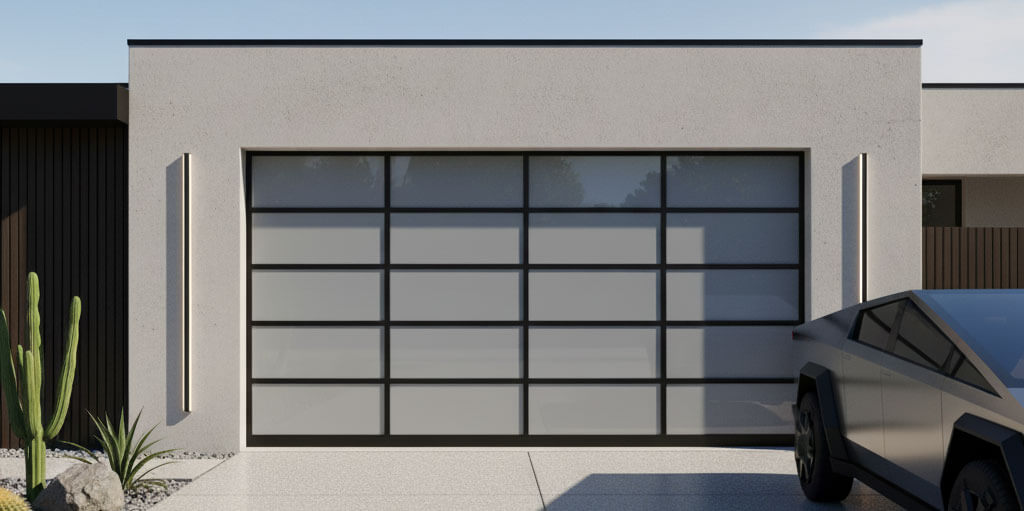
Garage door – AI image
I’ve seen it happen more than once: someone figures out the quick tricks – like popping the emergency release with a coat hanger, and suddenly they’re standing in your garage with access to everything inside.
Tools, bikes, cars… and usually a door that leads straight into the house.
“So how do I actually secure my garage door?”
Good news – you don’t have to replace the whole thing or spend thousands on upgrades.
A handful of smart, affordable fixes can make your garage door a lot tougher to crack, both from the outside and the inside.
Let’s walk through the best steps, starting with the simplest one: manual locks.
Step 1: Manual Locks
Before apps and smart openers, a good hunk of steel did the job, and it still does. If someone can’t physically lift your door, the rest of their tricks don’t matter.
Slide lock (garage “deadbolt”)
This mounts on the inside of the door and shoots a steel bar into the track. When engaged, the door can’t roll up.
- Cost: ~$10–$30
- Time: 10–15 minutes with a drill
- Pro move: Install one on each side for double resistance.
“But my opener locks it, right?”
Not really. Most openers hold the door down but can be defeated by the emergency release. A slide lock is mechanical—no power, no Wi-Fi, just solid metal.
Side bolt or padlock-through-track
Some doors/track systems have a pre-punched hole near a roller. Slide a side bolt or even a padlock through it when you’re out of town.
- Cheap, obvious, and very effective.
- Just don’t try to run the opener with the lock engaged (label the wall button if others use the garage).
Reinforce the emergency release area
If you’re adding manual locks, also block the classic “coat-hanger” attack: install a release shield (or at least zip-tie the release lever so it still works from inside but can’t be snagged from outside).
Locks + shield = no easy lift.
Daily habit that pays off
Make “lock the garage” part of your goodnight routine – same as the front door. It’s 5 seconds that removes 80% of casual break-and-lift attempts.
My take: If you do nothing else, add a slide lock. It’s the $20 upgrade that turns an easy target into “eh, not worth it.”
Step 2: Upgrade to a Smart Opener
Now let’s talk tech. If your garage door opener is more than 10 years old, it’s probably missing some key features that make a big difference in security.
Most older openers use fixed codes – that means your remote sends the same signal every time.
Thieves with cheap scanners can capture that code and replay it to pop your door open like they live there.
Rolling code technology
Newer smart openers use rolling codes (sometimes called “hopping codes”). Every time you press the remote, it generates a brand-new code that can’t be reused.
That alone shuts down one of the easiest garage hacks out there.
Alerts and remote control
Smart openers also connect to your Wi-Fi, so you can:
- Check the status of your door from your phone
- Close it remotely if you forget (and let’s be honest, we’ve all done it)
- Get alerts if it’s opened when you’re not home
It’s like having a doorbell cam, but for your garage.
Auto-close features
Some models even let you set an auto-close timer. So if you forget and leave it open while mowing the lawn or running errands, it shuts itself.
My take: If you’re already upgrading or your opener feels ancient, this is worth the $150–$200 investment. It’s more than a manual lock, but you’re getting both convenience and security in one shot.
Step 3: Block Common Break-In Tricks
Most garage break-ins aren’t “Mission: Impossible.” They’re quick, quiet, and stupidly simple. Shut down the easy stuff and you’ll send 90% of intruders packing.
Stop the coat-hanger attack (emergency release shield)
The classic move: slip a hook through the top weather seal, snag the emergency release, and pop the door.
- Install an emergency release shield (small metal cover) so the lever can’t be grabbed from outside.
- Zip-tie backup: You can also loop a light zip tie through the release lever and trolley. It still breaks from inside with a firm pull, but it resists a fish-hook from outside. My take: I prefer a proper shield so you keep full, safe emergency function.
Add anti-lift/track stops
If someone tries to torque the bottom panel and “walk” the rollers out of the track, anti-lift tabs (or track stops) make that way harder. Cheap parts, big headache for thieves.
Stiffen the soft spots
Flimsy center stiles and thin bottom panels fold under pry bars.
- Add a strut/bracing kit across wide panels.
- Upgrade the bottom retainer (the aluminum piece holding the rubber seal) to a heavier gauge.
- Replace worn hinges/rollers – loose, wobbly hardware = easy leverage.
Hide what’s inside (window film)
Got windows? Great for daylight – terrible for advertising your bikes and tool chests. Apply frosted or privacy film so no one can window-shop your stuff.
Fix the top seal (and gaps)
The hanger trick needs a gap. Replace a shredded top astragal/weather seal and adjust the opener’s stop position so the door fully seats against the header. No gap, no hook.
Secure the emergency cord the right way
Do not remove the cord (safety issue). Instead:
- Shorten it so it doesn’t hang near the top seam.
- Use a T-handle instead of a loop – harder to snag from above.
- Keep it bright red and reachable from inside for emergencies.
Quick gut check: if you can slip a ruler through the top and touch the release, so can someone else. After you add the shield/seal, you shouldn’t be able to reach anything but air.
Step 4: Add Eyes and Light Outside
Locks and shields keep the door physically closed. But what stops someone from even trying in the first place?
Light and visibility.
Most break-ins happen at night or in shadowy corners where no one’s watching. A couple of low-cost upgrades here can scare off trouble before it starts.
Motion-activated lighting
Stick a motion floodlight above or beside your garage door. The second someone walks up – boom, they’re in the spotlight. Thieves hate that.
- Solar options are cheap and easy if wiring’s a pain.
- Bonus: makes your driveway safer for you and guests at night.
Visible camera = instant deterrent
It doesn’t even have to be expensive. A simple outdoor Wi-Fi cam aimed at the garage or driveway works wonders.
The important part? Make sure it’s visible.
A thief who sees a lens staring at them is a thief who rethinks their choices.
Smart alerts
Pair a cam with your phone and you’ll know right away if someone’s hanging around your garage. Some models even let you talk through a speaker:
- “Can I help you?” in a calm voice is usually enough to clear people out fast.
My take: You don’t need Hollywood-style surveillance. A $40 motion light and a $60 Wi-Fi camera can cover your entire driveway and garage entrance.
Final Thoughts: Layer It for Real Security
Here’s the thing about garage door security: there’s no single silver bullet.
But when you stack a few simple upgrades, you take your garage from easy pickings to too much hassle.
Let’s recap the layers:
- 🧰 Manual locks – cheap, mechanical, always reliable
- 📡 Smart opener – stops code hacks, lets you control it remotely
- 🛡️ Break-in blockers – shields, anti-lift kits, stronger panels
- 💡 Eyes and light – motion lights and cameras to scare off snoopers
“Do I need all of them?”
Not necessarily. Even adding two upgrades can shut down the most common tricks. But the more layers you build, the less attractive your garage looks to anyone scouting for a target.
Bottom line: Your garage isn’t just a place for cars and tools – it’s a potential front door into your home.
Spend a little time and less than a couple hundred bucks, and you’ll sleep a whole lot better knowing it’s locked down right.

Marvin McAlister is an enthusiastic advocate for home safety and security, possessing a solid grasp of the subject through years of personal and professional involvement with security equipment. Check more about Marvin here.

The content of this page is meant exclusively for informational purposes. Conducting a professional safety audit is our recommendation when there is a proven danger.
Categories




Subcategories
Essentials 》guides • case studies
Around the home 》garden • patio • pool • garage • shed • recreational areas • electrical • lighting • animals and pests • fence • sidewalk • mailbox • doorstep
Far from home 》city • village • countryside • wildness
Vehicle safety 》general • passengers • driving • parking
You are in this section
– Safety plans
– Home security
– Fire safety
》Outdoor safety
– Firearm safety
– Family safety
– Disaster preparation